Protection of physical safety icon Protection of physical safety

Is present when a workers’ psychological, as well as physical safety, is protected from hazards and risks related to the worker’s physical environment.

“At the end of the day, the goals are simple: safety and security.” – Jodi Rell

Overview

What is protection of physical safety?

Protection of physical safety is present when a worker’s psychological, as well as physical safety, is protected from hazards and risks related to the worker’s physical environment.

An organization that protects physical safety would be able to state that:

  • The organization cares about how the physical work environment impacts mental health.
  • Workers feel safe (not concerned or anxious) about the physical work environment.
  • The way work is scheduled allows for reasonable rest periods.
  • All health and safety concerns are taken seriously.
  • Workers asked to do work that they believe is unsafe have no hesitation in refusing to do it.
  • Workers get sufficient training to perform their work safely.
  • The organization assesses the psychological demands of the jobs and the job environment to determine if there are hazards to workers’ health and safety.

Workers who perceive the workplace as protective of physical safety will feel more secure and engaged at work. Research has shown that when staff have higher levels of confidence in safety protection at work, they experience lower rates of psychological distress and mental health problems. The sense of physical safety protection is enhanced by adequate training with regard to physical safety, trust that the employer minimizes physical hazards, confidence that the employer responds quickly and effectively to safety incidents and the opportunity to have meaningful input into workplace policies and practices. Protection of physical safety is especially important in workplaces with high levels of safety sensitivity.

Safety climate is consistent with, and part of, the larger culture or climate of the organization. A psychologically safe climate is one where there is a shared and lasting belief and commitment to the importance of promoting and protecting the physical and psychological safety of all involved. This involves timely actions to identify and address risks.

Workplaces that fail to protect physical safety are likely to be more dangerous. Also, workers who do not see the workplace as protecting physical safety will feel less secure and less engaged, and this will increase the potential of psychological distress and mental health problems.

FAQs

  • Review work-scheduling practices to ensure they do not cause undue risk of psychological harm.
  • Review and revise job descriptions to include identification of physical hazards (with particular attention to those that may be hazardous to psychological health).
  • Respond promptly and effectively to work-related incidents and accidents.
  • Document all incidents and accidents, as well as responses.
  • Ensure that timely and effective supports are available following a critical incident (e.g. defusing, debriefing, employee and family assistance programs, psychological treatment).
  • Provide additional supports and services for staff working in high physical risk positions or environments.
  • Ensure staff have sufficient time and facilities for rest (particularly individuals working shifts or extended hours).
  • Provide training on how to minimize exposure to, and impact of, physical hazards.
  • Train staff to understand how physical hazards can affect psychological health and safety.
  • Provide equipment to reduce the impact of physical risks on psychological health (e.g. proper lighting, noise reduction, panic alarms, ventilation).
  • Train staff on the identification, reporting and investigation of physical hazards.
  • Provide team members with clear guidelines on the identification of physical hazards to encourage safe, timely and effective reporting.
  • Provide staff with the knowledge and skills needed to help cope with the psychological impact of incidents and accidents.
  • Ensure that health and safety programs and policies are clearly communicated to, and understood by, all staff, including new hires.
  • Make health and safety committee reports public and accessible to all staff (e.g. via posting on intranet, newsletter, staff room, bulletin boards).
  • If relevant, ensure all staff are aware of relevant legislative or regulatory changes in the area of health and safety.
  • Communicate organizational and industry safety policies to all staff.
  • Maintain up-to-date protocols for monitoring, reporting and responding to physical hazards.
  • In workplace vision and values, include protection of workplace physical safety.
  • Implement policies to protect and support workers who report physical risks.

Action

Next steps: Protection of physical safety at work
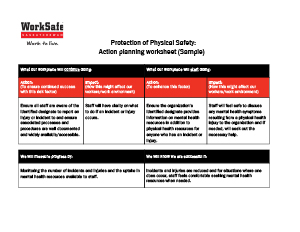
A work environment where management takes appropriate action to protect the physical safety of staff.

  • fewer job-related errors, incidents, accidents and injuries
  • reduced costs from work absence (e.g. sick time, disability costs)
  • improved physical and psychological health and safety of workers
  • reduced legal and regulatory costs
  • improved labour-management relations
  • Do issues related to protection of physical safety present a greater risk to particular groups of workers (e.g. new workers, certain jobs, shift workers, etc.)?
  • What are the strengths in your workplace in terms of protection of physical safety (e.g. what do you do well and what should you continue doing)?
  • What could your workplace do to improve in this area (e.g. what could you do more of and what could you do less of)?
Protection physical safety infographic

Protection of Physical Safety is psychosocial factor 13 from CAN/CSA-Z1003-13/BNQ 9700-803/2013 – Psychological Health and Safety in the Workplace. Retrieved from: https://www.csagroup.org/article/cancsa-z1003-13-bnq-9700-803-2013-r2018/. See also Guarding Minds at Work (Samra et al.): Retrieved from https://www.guardingmindsatwork.ca/resources.