ACT

Turning lessons into lasting change

The ACT phase closes the loop of the serious incident and fatality prevention model.

It’s where organizations apply what they’ve learned, improving systems, strengthening controls and embedding learning into daily work.

This phase focuses on continuous improvement, using insights from verification, investigations and worker feedback to reduce exposure to serious risks over time.

What to do

Purpose: 

To evaluate how well your safety management system supports serious incident and fatality prevention and to identify areas for improvement.

How to use this tool:

Review your organization or site using the audit protocol categories, including leadership commitment, worker engagement, hazard identification and control, implementation and continuous improvement. For each criterion, assess whether it is fully met (green), partially met (yellow) or has little or no evidence of being met (red).

Pay particular attention to criteria with serious incident or fatality potential. Use audit findings to identify strengths, prioritize gaps and establish corrective or preventive actions. Track all actions through to completion.

Why it matters:

Audits help organizations move beyond compliance by focusing attention on system weaknesses that can allow serious harm to occur. This tool supports learning, prioritization and effective allocation of resources.

Purpose: 

To monitor whether serious incident and fatality prevention efforts are working and where improvement is needed.

How to use this tool:

Select a balanced set of leading and lagging indicators that reflect learning, control effectiveness and risk reduction. Consider measures such as:

  • incident rates and severity
  • worker engagement and reporting
  • training and competency development
  • leadership and management effectiveness
  • risk perception and near-miss reporting
  • organizational culture and learning
  • financial impacts of incidents and prevention efforts

Review indicators regularly and use them to guide decision-making and improvement efforts.

Consider implementing a leading safety metrics program that focuses on identifying and measuring quality leading indicators that are proven to reduce serious incidents and fatalities that includes leadership engagements, safety observations and pre-job meetings. WorkSafe Saskatchewan offers a learning collaborative and a suite of short training courses that are focused on identifying proactive and leading indicators and creating a severity dashboard.

Why it matters:

Traditional injury metrics alone can create a false sense of safety. Using a broader set of indicators helps organizations understand whether systems are improving and whether serious risks are truly being reduced.


Tips for success

  • Lead visibly. Senior leaders should share lessons learned and model accountability.
  • Recognize progress. Celebrate proactive learning and improvements, not just the absence of incidents.
  • Keep it simple. Focus on the few metrics and actions that best drive learning.
  • Stay connected. Link findings from investigations back into your planning and training.
  • Use available tools. WorkSafe Saskatchewan provides templates and tools to help review your assessment process.

Outcome

By completing this phase, your organization will:

  • Strengthen its overall safety management system,
  • Build a culture that values curiousity and learning,
  • Improve readiness for unexpected events,
  • Reduce exposure to serious incident and fatality risk over time.

Continuous improvement turns the model into an ongoing cycle of learning, adaptation and resilience – not a one-time exercise.


What comes next

The ACT phase completes the cycle, but improvement never stops.

Revisit the PLAN phase regularly to review progress, re-evaluate risks and set new goals.

BACK TO START: Ensure leadership commitment & organizational readiness

Learning through collaboration

WorkSafe Saskatchewan’s serious incident and fatality prevention model was developed with support from the National Safety Council, SaskPower and numerous subject matter experts across industries. It is designed to evolve as your safety system matures.

A model is only effective if it's used. Apply the tools and

adapt the framework to fit your organization and culture.
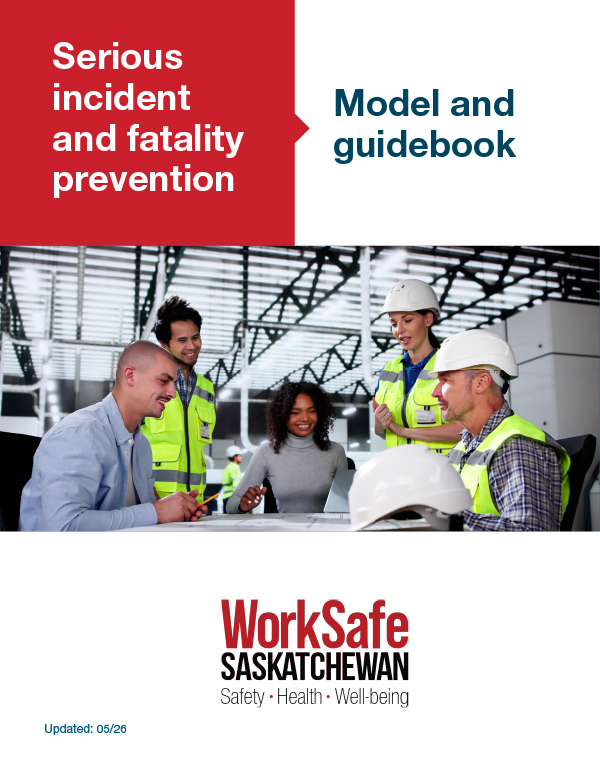

Download the serious incident and fatality prevention model and guidebook

Need help getting started?

WorkSafe Saskatchewan’s prevention team can walk you through the model and help you get started with using these tools to better understand and manage the complex risks that are present in your workplace.

Phone: 306.787.7248
Toll free: 1.800.667.7590
Email: worksafeinquiry@wcbsask.com