PLAN

Laying the foundation for serious incident and fatality prevention

The PLAN phase is where organizations build the foundation for serious incident and fatality prevention. It starts with leadership commitment and readiness – creating the structure, resources and expectations needed to identify and manage serious risks.

Planning ensures everyone understands why this work matters, where the organization stands today and what needs to happen next.

This stage sets the direction to the DO, CHECK and ACT phases of the model.

What to do

Purpose: 

To understand how well your existing safety management system addresses serious incident and fatality risk.

How to use this tool:

Gather and review key documents related to safety programs, hazard management and high-risk work. For each item, note whether it is current, outdated, missing or does not exist.

The review includes:

  • injury and illness records and claims data
  • incident reporting and investigation procedures
  • safety policies and safety management system documentation
  • high-risk procedures such as lockout/tagout, confined space, fall protection, contractor safety and change management
  • audit results, inspections and industrial hygiene surveys

Why it matters:

This tool helps identify gaps between what exists on paper and what is needed to manage high-severity risk. It establishes a factual baseline before decisions are made.

Purpose:

To assess leadership alignment, system maturity and organizational readiness for serious incident and fatality prevention.

How to use this tool:

Operational leaders and safety leaders complete a structured survey individually, then review results- together. The questions assess areas such as:

  • leadership commitment and resourcing
  • worker engagement and communication
  • risk identification and control processes
  • training, procedures and contractor management
  • learning, audits and corrective action follow-through

Scores are combined to highlight strengths, misalignment and priority gaps.

Why it matters:

This tool reveals whether leadership, systems and culture are ready to support serious risk management–or whether foundational issues need to be addressed first.

Purpose:

To understand how workers experience serious incident and fatality risk in real work conditions.

How to use this tool:

Use selected survey questions to gather worker perceptions through:

  • surveys
  • toolbox talks
  • training sessions
  • pre-shift meetings

Questions explore issues such as:

  • willingness to report hazards and near misses
  • confidence that serious risks are being addressed
  • production pressure, fatigue and distractions
  • effectiveness of controls, training and procedures
  • trust, communication and learning after incidents or near misses

Responses are reviewed for trends and alignment across levels.

Why it matters:

Worker perceptions provide critical insight into how work is actually done–and where system weaknesses may allow serious risk to persist.

Purpose:

To gather insight from leaders, supervisors, safety professionals and workers on serious risk and system effectiveness.

How to use this tool:

Facilitate structured conversations or interviews with:

  • senior leadership
  • safety and health professionals
  • front-line supervisors
  • front-line workers

Discussion topics include:

  • risk prioritization and resource allocation
  • change management and production pressure
  • incident investigation and follow-up
  • barriers to effective control of high-severity hazards

Why it matters:

This tool deepens understanding of organizational drivers and constraints that influence serious incident and fatality risk.

Purpose:

To clearly define leadership roles and responsibilities for serious incident and fatality prevention.

How to use this tool:

Review and align leadership expectations at all levels, including:

  • executive and senior leaders
  • manager and supervisors
  • safety and health professionals

Expectations focus on:

  • ownership of serious risk
  • resource allocation
  • use of meaningful metrics
  • support for learning, not blame
  • maintenance of critical controls

Roles and responsibilities should be updated to reflect these expectations.

Why it matters:

Clear leadership expectations ensure accountability for serious risk reduction and reinforce that preventing life-altering harm is a core leadership responsibility.


Tips for success

  • Lead from the top. Executive and front-line leaders must model curiosity, learning and accountability.
  • Engage workers early. Workers’ knowledge of real-world conditions is vital to identifying uncontrolled energy sources.
  • Start small. Pilot the model in one department or work area before expanding across the organization.
  • Use available tools. WorkSafe Saskatchewan provides templates to help assess readiness and leadership alignment.

Outcome

By the end of this stage, your organization should have:

  • A clear roadmap to implement the serious incident and fatality prevention model,
  • Leadership sponsorship and defined roles,
  • A communication and engagement plan to involve workers at all levels,
  • Agreement on consistent terminology, definitions and expectations.

These elements ensure your serious incident and fatality prevention strategy is credible, supported and ready for action.


What comes next

Once your organization has a plan and leadership commitment in place, move to the DO phase – identifying and assessing your serious risks using the energy wheel and severity and control risk matrix.

DO: Assess and understand serious incident and fatality risk

Learning through collaboration

WorkSafe Saskatchewan’s serious incident and fatality prevention model was developed with support from the National Safety Council, SaskPower and numerous subject matter experts across industries. It is designed to evolve as your safety system matures.

A model is only effective if it's used. Apply the tools and

adapt the framework to fit your organization and culture.
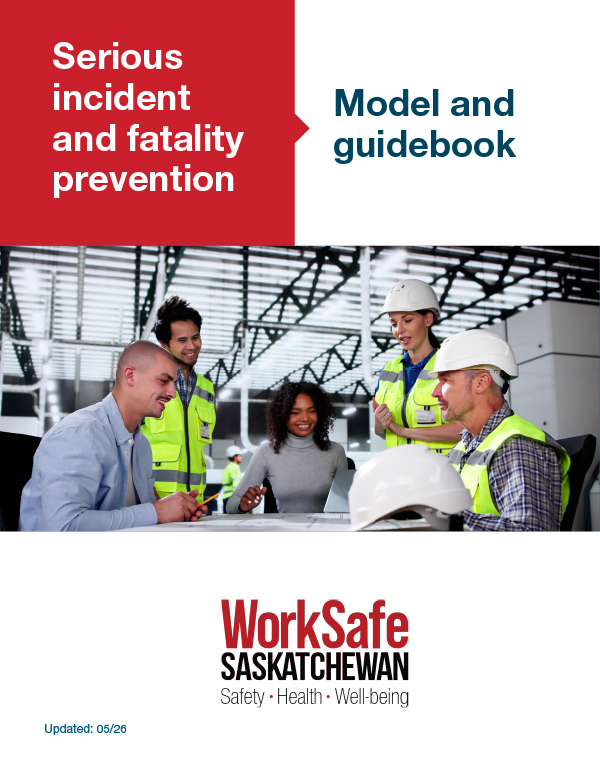

Download the serious incident and fatality prevention model and guidebook

Need help getting started?

WorkSafe Saskatchewan’s prevention team can walk you through the model and help you get started with using these tools to better understand and manage the complex risks that are present in your workplace.

Phone: 306.787.7248
Toll free: 1.800.667.7590
Email: worksafeinquiry@wcbsask.com